
Chicago Jazz Spots 1914 – 1928
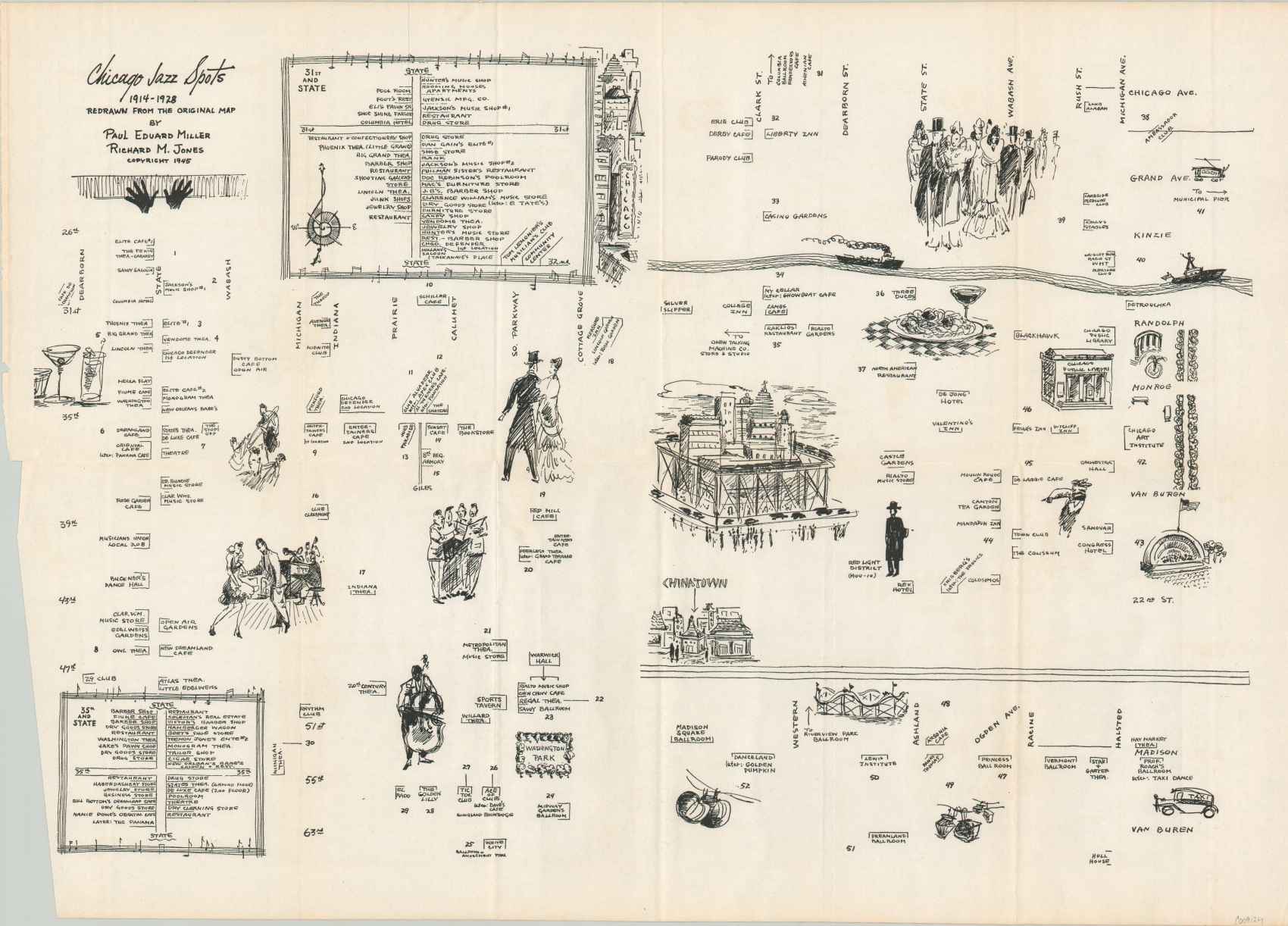
An abstract map of Chicago’s jazz spots published during the genre’s height across the city.
Out of stock
Description
“White jazzmen spent plenty of time in the Black Belt, listening to their favorite music as played by the Negroes – the influence of the latter on the former is immeasurable.” [pg. 30, Esquire’s 1946 Jazz Book].
This fascinating and somewhat abstract map of Chicago highlights the myriad of jazz spots available across the city in approximately the first quarter of the 20th century. Dozens of spots are imprecisely shown at their respective corners, though only prominent streets are haphazardly labeled. Sketchy illustrations provide a snapshot of the contemporary attitude regarding the jazz scene across Chicago. Food, drink, and decorations from local joints, crowds dancing and singing, and views of iconic landmarks are all included.
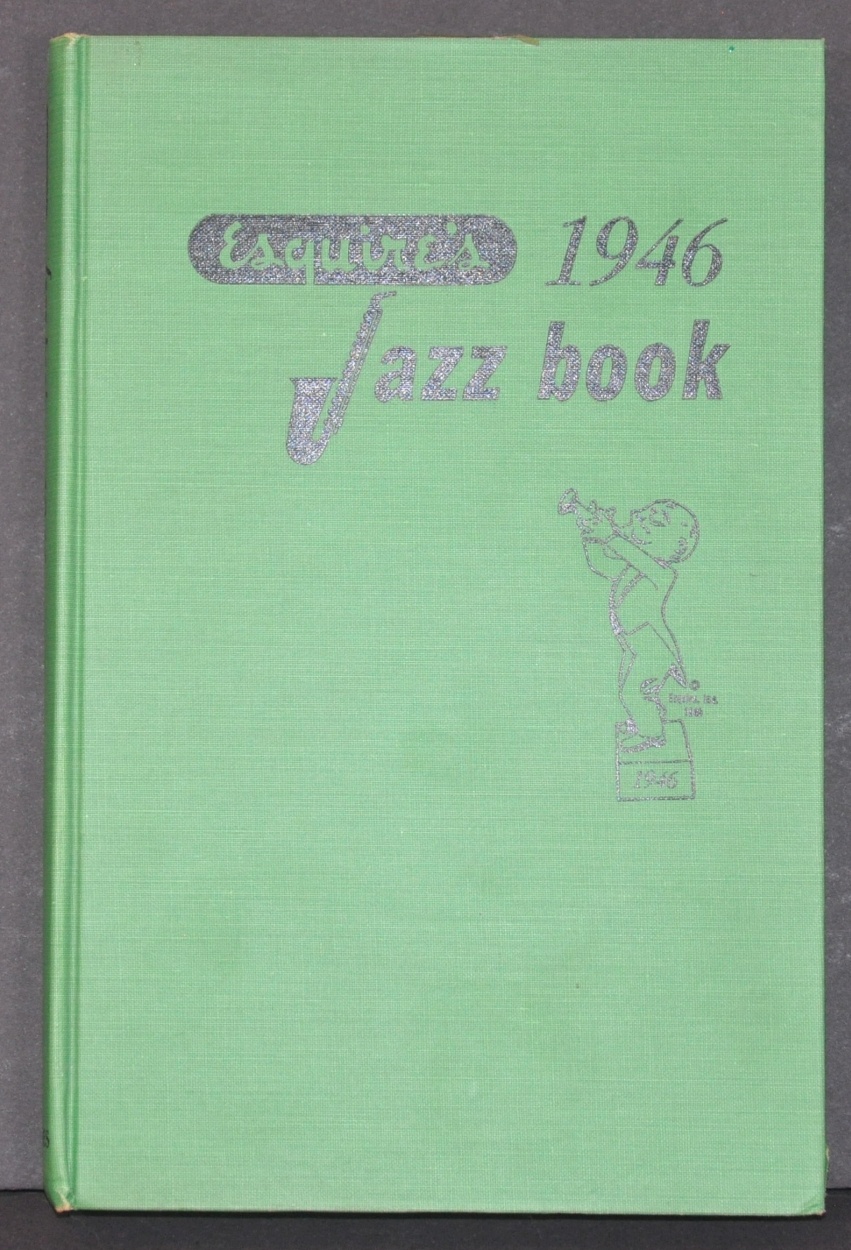
Inset maps of the South Side show further details for two intersections known especially for their concentration of music venues; the corners of 31st and State and 35th and State. The map, created by jazz scholar Paul Miller and composer Richard Jones, was originally issued in the 1946 Esquire Jazz book (a copy of which is included). [From the Introduction] “This year’s book offers, among its other attractions, the most complete documentation, in text, map, and picture form, of Chicago jazz that has ever appeared between two covers.”
Accompanying articles include “Thirty Years of Chicago Jazz”, “Chicago Jazz History”, and “Esquire’s All-American Band.” Much of the text refers to the often fraught race relations between white Jazz artists and the ‘Negro’ players from New Orleans.
Map Details
Publication Date: 1945
Author: Paul Miller and Richard Jones
Sheet Width (in): 23.75
Sheet Height (in): 16.75
Condition: A-
Condition Description: Uneven left (binding) edge has one small tear in the upper left. Very faintly toned around the edges, consistent with age. Includes a copy of Esquire's 1946 Jazz Book.
Out of stock